

TOURISM OFFICE
Ponte 4 - 28863 Formazza (VB)
Tel. +39 0324 63059
Email: prolocoformazza@gmail.com
OPENING HOURS
Tourist Office opening hours from September 1st to May 31st
Tuesday from 2:30 pm to 6 pm
Friday and Saturday from 10am to 12:30pm and from 2:30pm to 6pm
Sunday from 10 to 12:30
LINK
Swiss Weather
© 2025 by Pro Loco Formazza
NATURE AND LANDSCAPES

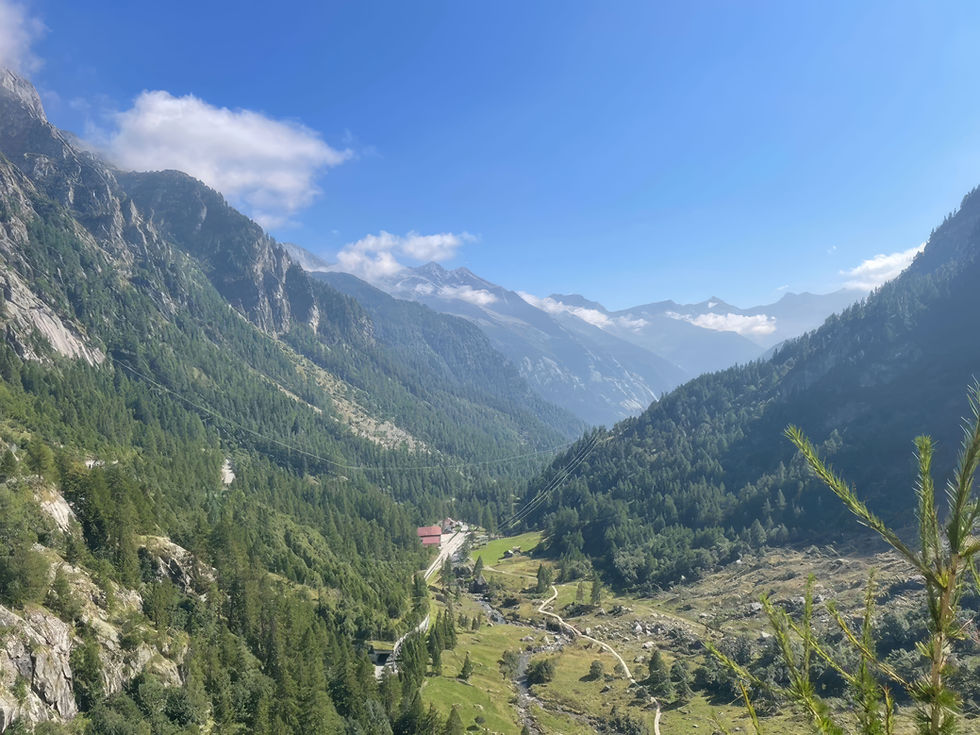
A Beautiful Landscape
Val Formazza is an authentic and pristine territory, a place where the primordial energy of water has shaped Alpine landscapes of extraordinary beauty. Here, the silence of the peaks converses with the roar of the Toce Waterfall, one of the most spectacular waterfalls in Europe: 143 meters of pure power that have always been the valley's icon.
The nature of Val Formazza changes its face with each season, offering unique experiences to outdoor enthusiasts.
In winter, Riale becomes the capital of cross-country skiing and snowshoeing excursions; in spring, the meadows burst with color and the streams fill with meltwater. Summer invites visitors to discover mountain pastures where the famous Bettelmatt cheese is produced, while trails lead to artificial lakes like Morasco, Toggia, and the striking Lake Vannino. Autumn, with its golden larch trees, transforms the valley into a living painting.
The vast Lago del Sabbione and the numerous artificial basins, however, tell another story of the valley: one of perfect balance between nature and innovation. This is where the important system of Hydroelectric Power Plants of Val Formazza fits in, a historical industrial heritage that makes this area a benchmark for clean energy production. A concrete example of sustainability, where the power of water—the absolute protagonist of the valley—becomes a resource for the future.
Amidst coniferous forests, larch groves, and rhododendrons lives a rich and protected fauna: roe deer, deer, marmots, and chamois accompany visitors, while the golden eagle rules the sky with its majestic flight.
Walking the trails of Val Formazza, such as the Via dell'Abate or the evocative Walserweg, means immersing oneself in an authentic environment, where Walser culture and the majesty of the Alps merge into an intense and memorable experience.
A territory to live, narrate, and discover, where every step is an invitation to connect with the purest essence of the mountains.
EXPERIENCE THE SEASONS WITH US


THE FLORA
The Formazza Valley is home to a rich flora, growing between 400 and 2,700 meters above sea level in a mountainous and subalpine environment. Here, thanks to a unique microclimate and the presence of perennial snow at low altitudes, there are coniferous forests (Scots pine, fir, and larch) and, further up, typical Alpine flora: juniper, rhododendron, mountain pine, and blueberry.
In spring and summer, the pastures are ablaze with color: gentians, crocuses, saxifrages, golden buttercups, columbines, arnica, primroses, and even the elegant edelweiss. Some species, such as alpine chamomile (Calaminta) and glacial mugwort used in genepi, are now protected for their ecological and therapeutic value.
The variety and beauty of the Formazza Valley's wild flora is such that in the 1970s, the idea of creating an alpine botanical garden to protect and enhance it was proposed.
At Lake Kastel, there's a botanical garden with signs describing and explaining all the flowers.


THE FAUNA
La Val Formazza ospita una ricchissima varietà di fauna alpina, simile a quella del resto dell’arco ossolano. Tra le farfalle, spiccano la Parnassius Apollo, l’Erebia e la Vanessa cardui, visibili anche in alta quota. Tra gli anfibi, sono presenti la Salamandra pezzata, quella nera e il Tritone alpestre.
Nelle acque fredde dei torrenti vivono la Trota fario, l’Iridea e la rara Trota nera selvatica. Tra i rettili, comuni la Lucertola vivipara e serpenti innocui come il Colubro, mentre le vipere (Aspis e Berus) frequentano le zone soleggiate e sassose.
Numerosi gli uccelli alpini: Pernice bianca, Gracchio alpino, Fringuello alpino, Aquila reale, gufi e civette. I boschi ospitano anche galliformi come il Francolino di monte e il Gallo forcello.
Tra i mammiferi, l’osservazione è facile: Lepre, Scoiattolo, Marmotta, Volpe, Ermellino, Donnola, Tasso, Ghiro. Tra gli ungulati si avvistano Camoscio e Capriolo. Spesso lo Stambecco e il Cervo fanno capolino nella valle, questi ultimi possono essere spesso avvistati lungo la strada.


